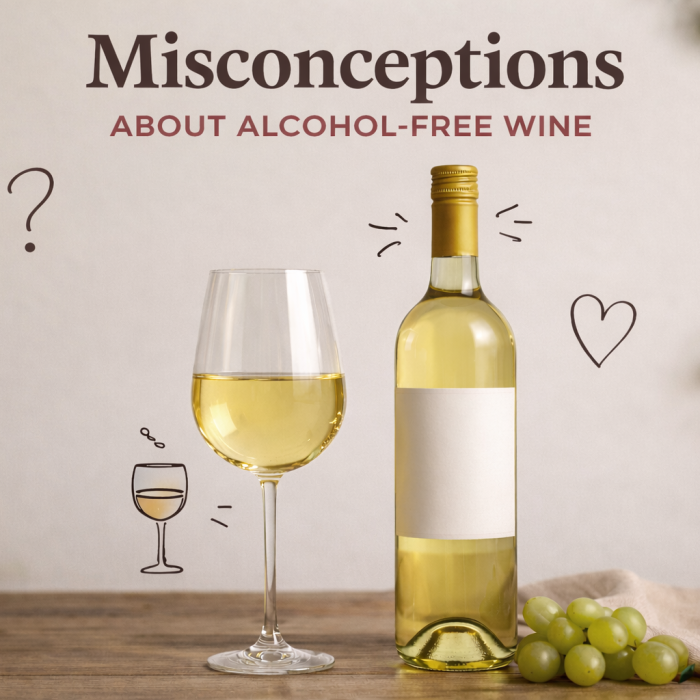
Misunderstandings About Alcohol-Free Wine
Alcohol-free wine is on the rise. More and more often, a serious alcohol-free alternative is offered alongside a classic wine list. Yet we notice that many people still have doubts. Understandable, since for years alcohol-free wine did not have a very good image. But those days are now behind us.
Misunderstanding 1: “Alcohol-free wine is just grape juice”
We hear this often. And to be fair: some alcohol-free drinks from the past indeed resembled sweet grape juice. But good alcohol-free wine has little to do with that.
Quality alcohol-free wine actually starts as real wine. The grapes are fermented just like any other wine. Only afterwards is the alcohol removed through a careful process, such as vacuum distillation. This way, aromas, acids, and structure are preserved.
Grape juice lacks fermentation, complexity, and balance. Good alcohol-free wine does not.
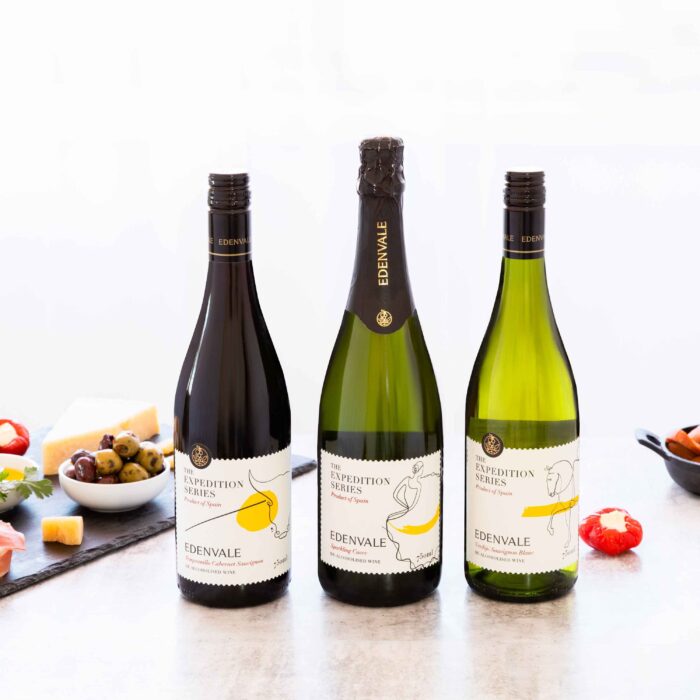
From our range: The Edenvale Verdejo Sauvignon Blanc is fresh, dry, and lively. With distinct acidity and spicy notes, you don’t drink this like a soft drink, but as a full-bodied glass of wine.
Misconception 2: “Non-alcoholic wine does not go with food”
On the contrary. Non-alcoholic wine can pair surprisingly well with food, sometimes even better than you expect.
Because alcohol is absent, acids, freshness, and aromas often play a greater role. This makes non-alcoholic wine particularly suitable with lighter dishes, such as vegetables, fish, shellfish, or vegetarian cuisine.
Also, with lunch dishes or a midweek dinner, non-alcoholic wine is a nice choice: you keep the wine moment but remain clear-headed and energetic.
Good pairing:
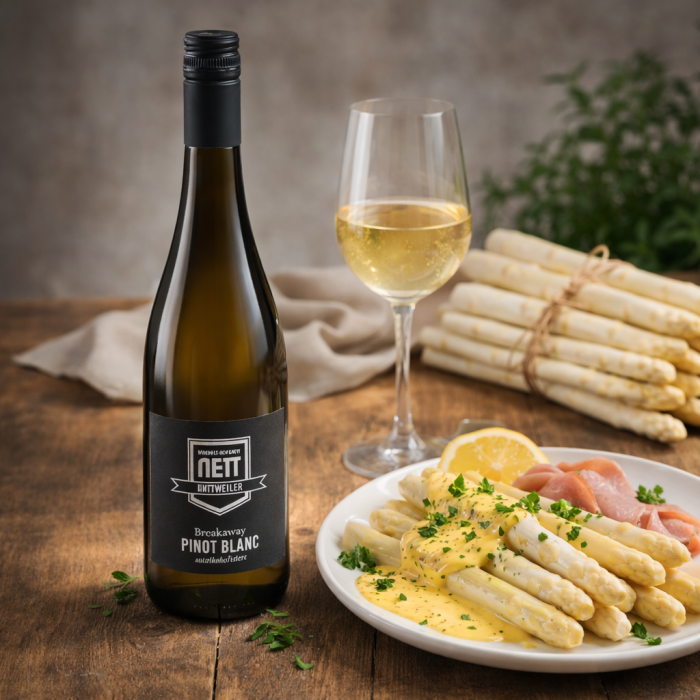
Bergdolt-Reif & Nett Breakaway Pinot Blanc with asparagus or salad
Edenvale Tempranillo Cabernet Sauvignon with grilled vegetables, mushrooms, or a light pasta.
Misconception 3: “You immediately notice that something is missing”
What people usually mean is that they miss the warmth of alcohol. And that’s true: alcohol gives body and roundness. But alcohol is not the same as flavor.
Good non-alcoholic wine compensates for this with fresh acidity and light bitterness.
The result is not a replacement, but an alternative with its own character. Those who taste with an open mind discover that nothing is ‘missing’.
Example:
The Jederzeit Sparkling proves this perfectly. Crisp, dry, and elegant. Not a sweet bubble, but a serious sparkling wine that fits just as well with a festive moment.
Misunderstanding 4: “All non-alcoholic wine is sweet”
This is probably the most outdated misunderstanding. In the past, sweetness was used to mask loss of flavor, but modern non-alcoholic wine no longer needs that.
Dry examples from our range:
Kolonne Null Rosé – light, refined, and dry
Edenvale Verdejo Sauvignon Blanc – fresh, mineral, and far from sweet
Why these misunderstandings persist
Many ideas about non-alcoholic wine are based on experiences from years ago or on a single less successful tasting experience. Just like with regular wine, quality makes the difference here too.
At Grape Zero, we therefore consciously select a compact range. Each wine is extensively tasted, compared, and chosen for flavor, balance, and suitability at the table. Only wines that we enjoy pouring ourselves make it into our selection.
We use functional and analytical cookies.
More about this in our privacy statement.
 Nederlands
 English
 Français
 Deutsch